
5 Conversations Every Couple Should Have Before Marriage (But Often Avoid)
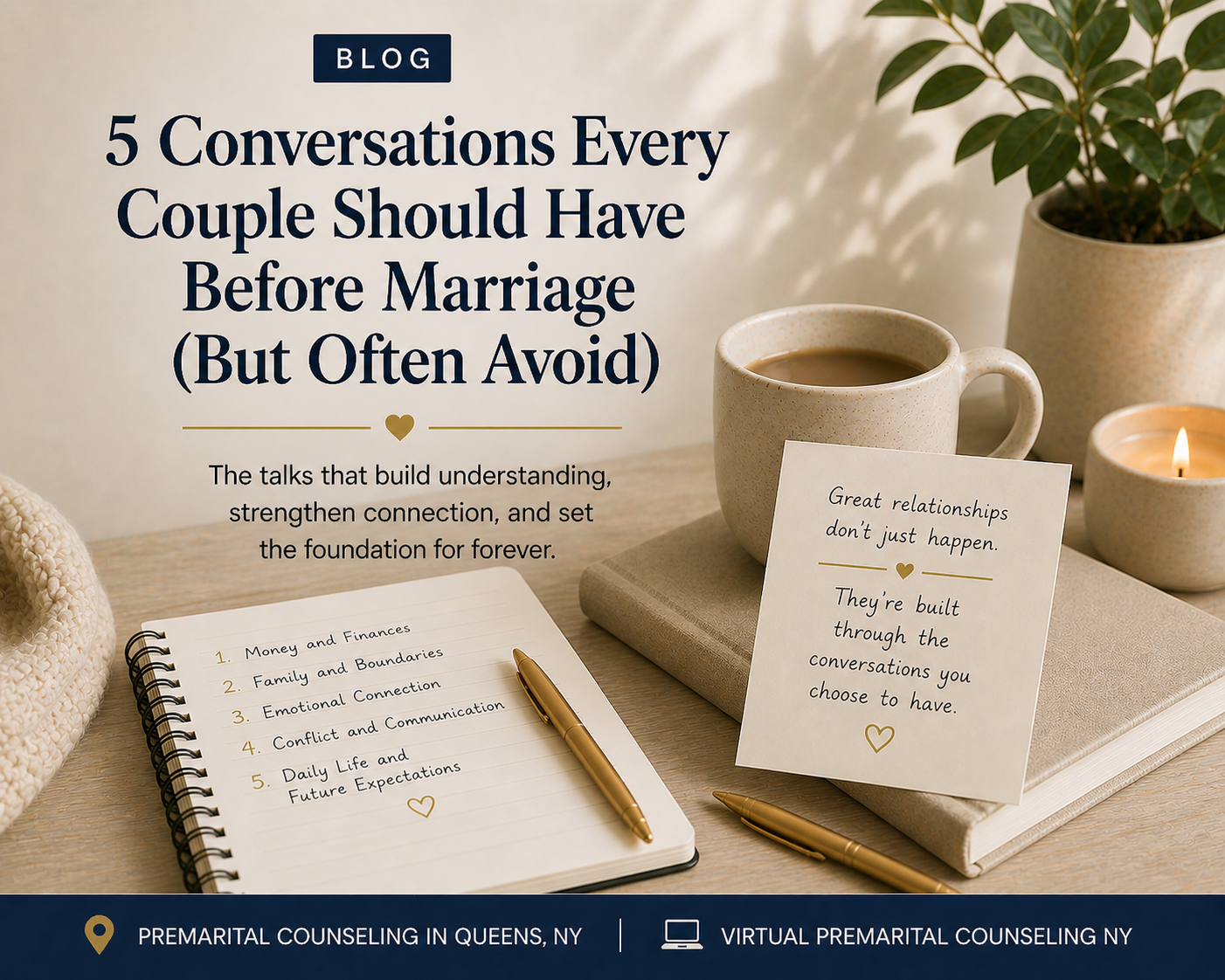
In the early stages of a relationship, there is often a sense that things will fall into place naturally. You learn about each other over time. You spend time together, share experiences, and build connection in a way that feels organic. Many important things do come up during that time, but not everything does.
There are certain conversations that tend to get pushed off or left unspoken, and often become sticking points when people come to marriage counseling in Queens. This usually is not because couples are avoiding them on purpose. More often, it comes from a sense that there is time, or an assumption that you are on the same page, or simply not knowing how to bring something up without it feeling awkward or unnecessary.
When couples begin premarital counseling in Queens NY or virtual premarital counseling in NY, they often realize that there are areas of their relationship they have not fully explored. Some of these topics are practical, and some are more emotional. All of them play a role in how the relationship functions over time.
Money: What It Means to Each of You
One of the areas that often gets less attention than expected is money. Many couples have talked about finances in some way, but those conversations can stay at a surface level. It might include general plans or shared goals, without going into how each person relates to money or what it represents to them.
Money can carry different meanings depending on someone’s background and experiences. For one person, it may be closely tied to security and stability. For another, it may be connected to freedom or flexibility. These differences do not always show up right away, but they can influence decisions and reactions later on.
Taking time to talk through these perspectives creates more clarity. It helps each partner understand where the other is coming from and makes it easier to approach financial decisions as a team.
Family and In-Laws: Expectations and Boundaries
Family and outside relationships are another area where assumptions can come into play. Many couples expect that things will work themselves out naturally when it comes to family involvement, holidays, and boundaries. Over time, these areas can become more complex.
Each person brings their own expectations based on how they grew up and what they are used to. Talking about these expectations ahead of time allows couples to understand where they are aligned and where they may need to find a middle ground.
These conversations also help create a shared approach to handling outside influences. Instead of figuring it out in the moment, there is already a sense of how you want to navigate those situations together.
Emotional Connection: What Helps You Feel Close
Emotional connection is often felt more than it is discussed. In the beginning of a relationship, connection can feel easy. You spend time together, enjoy each other’s company, and feel close without needing to think about it too much.
As life becomes busier, that connection can require more intention. People tend to have different ways of experiencing closeness. Some feel connected through conversation, others through time spent together, and others through small gestures or acts of care.
When couples understand what helps each person feel close, it becomes easier to maintain that connection over time. There is less guesswork and more clarity about what matters to each of you.
Conflict: How You Handle Disagreements
Every couple will have disagreements. The difference lies in how those disagreements unfold.
Some people move toward conflict and want to resolve it right away. Others need time to think and process before continuing the conversation. These differences can lead to misunderstandings if they are not recognized.
One person may feel like the other is avoiding the issue, while the other feels overwhelmed by the pace of the conversation. When couples take time to understand these patterns, they are better able to navigate disagreements without it turning into something larger.
They begin to recognize what is happening in the moment and adjust how they respond, which can make conflict feel more manageable.
Intimacy: Sexual, Physical, and Emotional Connection
Intimacy is one of the most important and often least discussed parts of a relationship. Many couples assume that this area will naturally take care of itself, especially early on when connection feels strong.
Over time, intimacy can shift. Stress, routines, life transitions, and emotional dynamics all play a role in how connected partners feel physically and emotionally. Without open conversation, it is easy for misunderstandings to develop or for one or both partners to feel unsure about how to express their needs.
Intimacy includes more than one dimension. There is sexual intimacy, which can bring up questions about expectations, comfort levels, and communication. There is physical intimacy, such as affection and touch, which can hold different meanings for different people. There is also emotional intimacy, which involves feeling known, understood, and safe with each other.
Each person enters a relationship with their own experiences, preferences, and assumptions around these areas. Talking about them allows couples to better understand each other and create a shared understanding of what intimacy looks like in their relationship.
These conversations can feel vulnerable at first, but they often lead to a stronger sense of connection. When both partners feel comfortable expressing what matters to them, it becomes easier to stay connected over time and to navigate changes as they come.
Daily Life and Future Expectations: How You See Your Life Together
Expectations about daily life are another area that often goes unspoken. This can include things like how responsibilities are shared, how decisions are made, and what each person envisions for their future together.
Many of these expectations exist without being fully articulated. Each person may assume that certain things are understood, only to find later that there are differences in how they see things.
Having these conversations ahead of time allows couples to align their expectations and make decisions together. It creates a clearer picture of what partnership will look like in everyday life.
Why These Conversations Matter
One of the most valuable parts of premarital counseling is having a space where these conversations can happen in a structured and thoughtful way. Instead of waiting for something to come up naturally, couples are guided through topics that are important for the long term health of the relationship.
There is also support in how to have these conversations. It is one thing to bring up a topic, and another to stay connected while talking about it. Premarital counseling helps couples approach these discussions in a way that feels respectful and productive.
As couples move through this process, there is often a sense of clarity that develops. Things that felt vague or uncertain become more defined. Each partner has a better understanding of where the other is coming from and what matters to them.
That clarity creates a stronger sense of alignment. It allows couples to move forward with a shared understanding, rather than relying on assumptions. It also builds confidence in their ability to handle future conversations that may feel more challenging.
Want Support Having These Conversations?
If you’re considering premarital counseling in Queens NY or virtual premarital counseling in NY, this process can help you slow down, have meaningful conversations, and build a strong foundation together.
About the Author:

Michal Goldman, LCSW, is a couples therapist in Queens specializing in Emotionally Focused Therapy (EFT) for couples, premarital counseling in NY, and discernment counseling. She helps couples move from disconnection to understanding and connection— whether they’re rebuilding trust, navigating ambivalence, or learning to communicate more effectively.
Learn more about her work or schedule a consultation at michalgoldmanlcsw.org/about.
