
When Individual Healing Supports the Relationship: How IFS Therapy and Couples Therapy Can Work Together
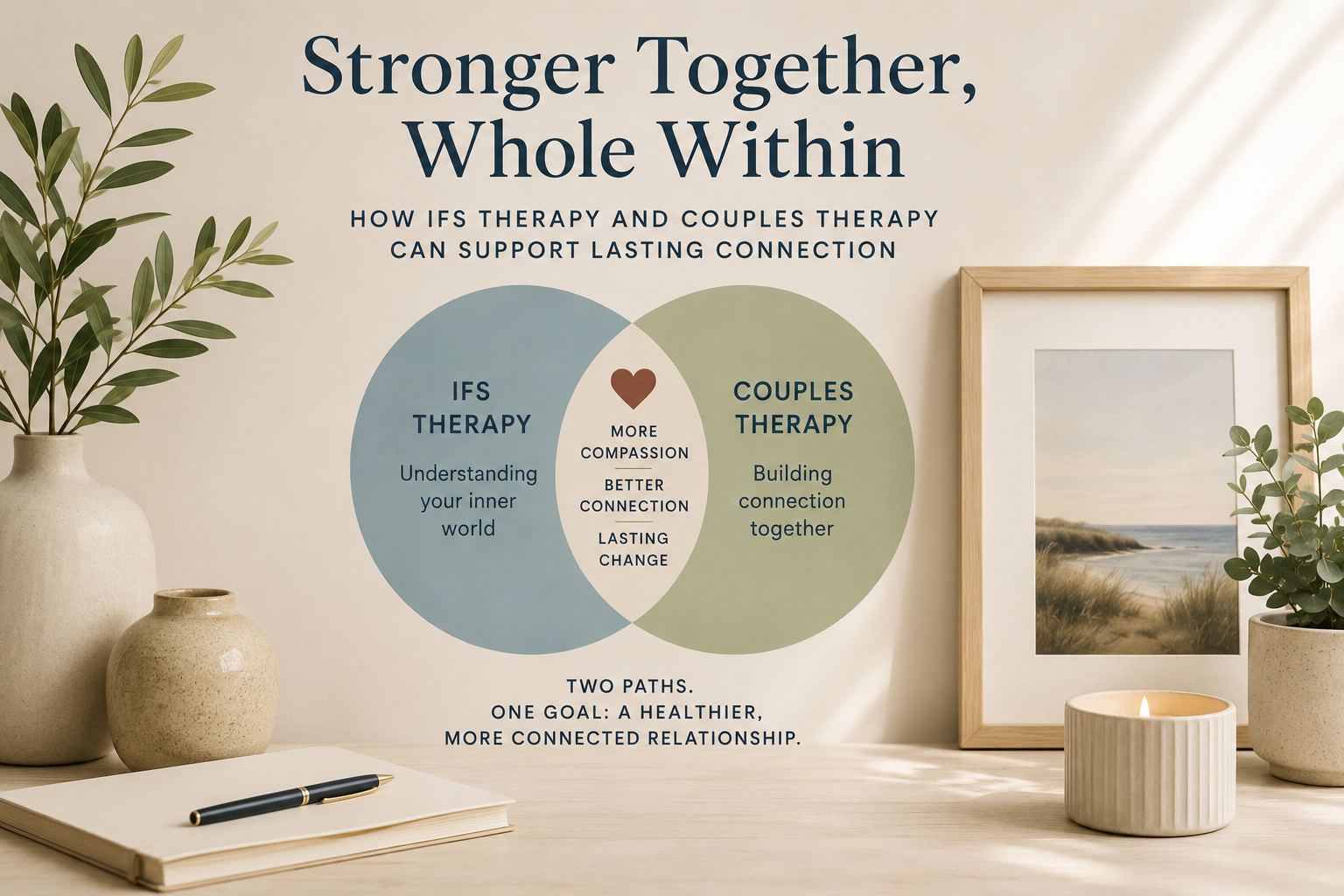
One of the most common questions couples ask is whether they should focus on couples therapy together, or whether one or both partners should also be doing individual therapy. The answer is often: it depends on what is happening underneath the surface.
In many relationships, conflict is not only about communication skills. Couples often come into therapy already knowing how they “should” communicate. The harder part is understanding why certain moments feel so emotionally charged, why the same arguments keep happening, or why one partner suddenly shuts down, becomes defensive, or feels overwhelmed during conflict.
This is where approaches like IFS therapy NYC can be an incredibly helpful adjunct to couples work.
Internal Family Systems (IFS) therapy helps people understand and relate differently to the different “parts” of themselves. Rather than viewing reactions like anxiety, anger, withdrawal, perfectionism, or people-pleasing as flaws, IFS sees them as protective strategies that developed for a reason. The goal is not to get rid of these parts, but to understand them with more curiosity and compassion.
For example, in couples therapy, one partner may intellectually understand that their spouse is not attacking them, but still feel intensely criticized during disagreements. Another partner may genuinely want closeness but become emotionally flooded whenever vulnerability enters the conversation. Sometimes these reactions are connected to earlier experiences, old wounds, or protective systems that become activated automatically in relationships.
Couples therapy can absolutely help with these dynamics. In fact, emotionally focused couples therapy often helps partners recognize the cycle they are stuck in and respond to each other in new ways. But there are times when adding individual therapy creates even more room for growth.
As a therapist specializing in marriage counseling queens, I often see how individual healing and relational healing can strengthen each other when approached thoughtfully.
When Couples Therapy Alone May Be Enough
Many couples do very well with couples therapy as the primary treatment. This is especially true when:
The main issue is communication breakdowns or recurring interactional cycles
Both partners are emotionally available enough to engage in the work
The conflict is primarily relational rather than rooted in severe unresolved trauma
Each partner can tolerate emotional conversations without becoming consistently overwhelmed
Both people are motivated to understand each other and work toward repair
In these cases, couples therapy itself often becomes deeply healing. Partners begin to experience each other differently. They learn how to slow down conflict, express vulnerability more safely, and create new emotional experiences together.
Sometimes what looks like an “individual issue” is actually maintained by the relationship cycle itself. Once the cycle shifts, the symptoms lessen significantly.
When Adding Individual Therapy Can Be Helpful
There are also situations where individual therapy can support the couples work in an important way.
For example:
One partner becomes emotionally flooded very quickly
Some people intellectually want connection, but their nervous system reacts intensely during vulnerability or conflict. They may dissociate, shut down, panic, become defensive, or feel emotionally overwhelmed. Individual work can help them understand and regulate these reactions more effectively.
Trauma or longstanding emotional wounds keep getting activated
If earlier attachment injuries, trauma, chronic criticism, or shame are repeatedly entering the relationship dynamic, individual therapy may help create more internal safety and self-understanding.
Protective patterns are interfering with relational progress
Sometimes a partner’s self-criticism, perfectionism, caretaking, emotional numbing, or avoidance is so strong that it becomes difficult to fully engage in couples work. IFS can help people relate differently to those protective parts rather than fighting against themselves.
One partner wants more self-understanding outside the relationship
Not every issue belongs entirely inside the couple system. Some people want space to explore identity, anxiety, family-of-origin dynamics, or emotional patterns more deeply on their own while still working on the relationship together.
Couples therapy keeps circling the same stuck point
Occasionally couples gain insight into their cycle but still feel unable to shift it emotionally. Additional individual work can sometimes help loosen internal blocks that make change difficult.
How IFS Can Strengthen Couples Work
One of the things many people appreciate about IFS is that it helps reduce shame.
Instead of thinking:
“There’s something wrong with me.”
The framework becomes:
“A part of me is trying to protect me.”
That shift alone can create enormous emotional flexibility.
When people begin understanding their reactions with more curiosity instead of self-judgment, they often become less reactive with their partner as well. Defensiveness softens. Emotional awareness increases. Vulnerability feels more accessible.
IFS can also help people differentiate between present-day relationship experiences and older emotional fears that may be getting activated automatically.
For example:
A partner withdrawing during conflict may trigger an abandoned part
Criticism may activate a deeply ashamed part
Emotional dependence may trigger a protective part focused on self-sufficiency
Vulnerability may activate fears of rejection or failure
Understanding these internal systems can make couples therapy more effective because partners are no longer only arguing about the surface issue. They begin recognizing the deeper emotional processes underneath.
Should You Start with Couples Therapy or Individual Therapy?
There is no one correct answer.
If the primary distress is happening inside the relationship itself, couples therapy is often the best starting point. Relationship patterns are usually most effectively treated in the room where they are actively happening.
At the same time, if one or both partners feel emotionally overwhelmed, highly reactive, or stuck in longstanding internal struggles, adding individual therapy can create additional support and insight.
In many cases, the therapies work best collaboratively rather than competitively. Individual therapy helps create internal awareness and regulation, while couples therapy helps partners build new relational experiences together.
Healing does not have to happen entirely alone or entirely together. Often, growth happens through both.
If you are interested in learning more about IFS work, Hilary Kopple, LCSW, who specializes in anxiety, trauma, and Internal Family Systems therapy in New York has excellent resources on her page.
And if you are looking for couples therapy focused on helping partners break painful cycles and rebuild emotional connection, you can learn more about my work in marriage counseling queens.
